
Cut emergency inspection time 60% and saved millions in development costs by aligning 20+ stakeholders across 3 business units.
Role
Lead Designer
Company
Pacific Gas & Electric Co
Team
1 PM, 2 Engineering teams
Stakeholders
20+ within 3 business units
TL;DR: PG&E needed faster emergency inspections during wildfire power shutdowns. I led research and a stakeholder workshop that uncovered duplicated effort across 60% of the inspection journey, then redesigned the mobile app inspectors already trusted instead of building new software — cutting inspection time 60% and saving PG&E millions in avoided cost.
Challenge
During wildfire season, PG&E shuts off power to prevent fires — but restoring it depended on slow, manual ground inspections, leaving communities without power for days. The business initially asked for a new web app to manage these inspections. Stakeholder interviews surfaced something different: inspectors needed offline, aerial capabilities the proposed app couldn't deliver. I made the case to pivot — instead of building new software, we'd enhance Maps+, the offline mobile tool inspectors already relied on, with safety and planning features built for aerial inspection.
My Role & Approach
I led service design and UX research, partnering with 1 PM and 2 engineering teams.
- Stakeholder interviews and a cross-functional kickoff workshop, aligning 20+ stakeholders across 3 business units
- Risk mapping and assumption mapping to pressure-test the original plan
- 12 user interviews plus a helicopter ride-along for field research with inspectors
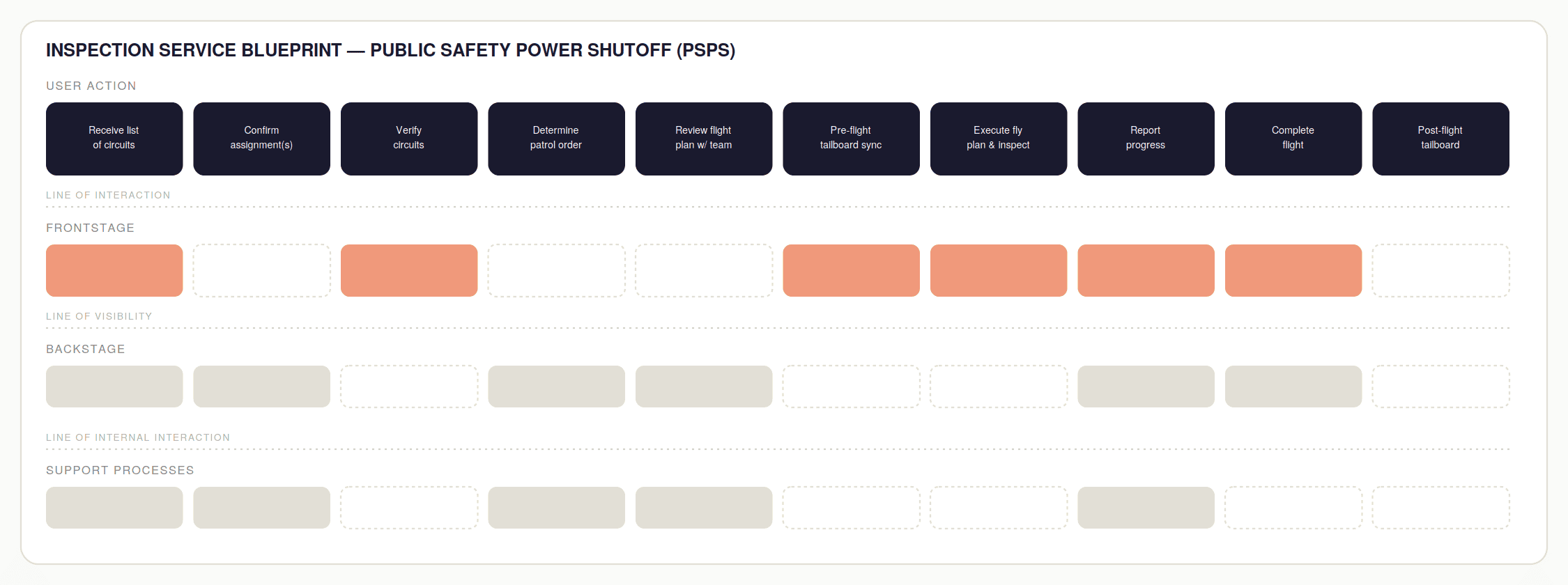
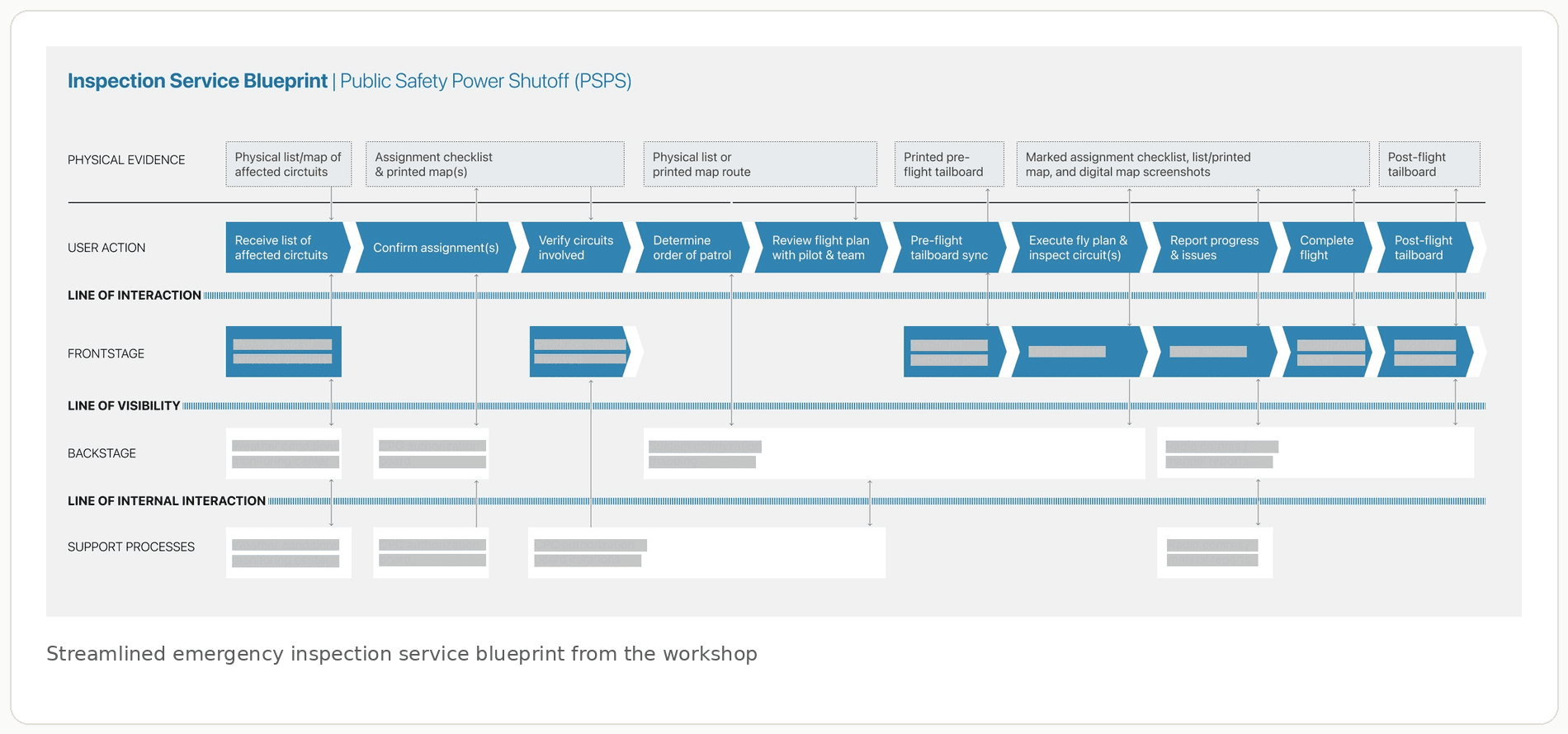
- A dedicated service blueprinting workshop mapping the full emergency inspection journey

What We Found
Mapping the inspection journey with stakeholders for the first time surfaced problems no one had named out loud:
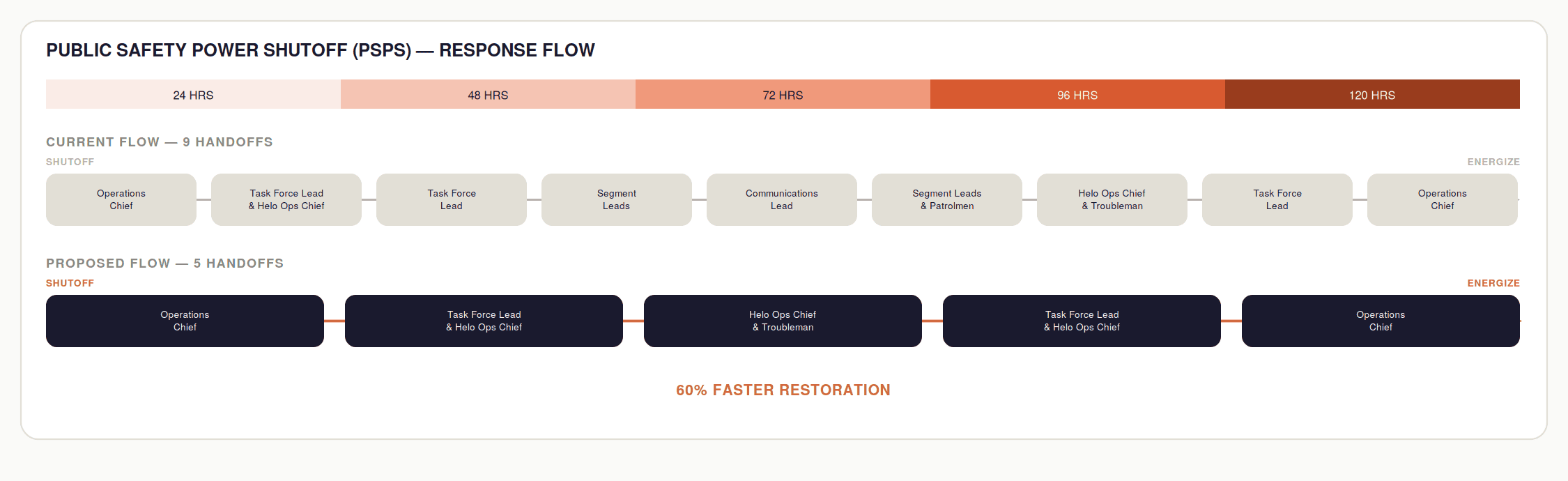
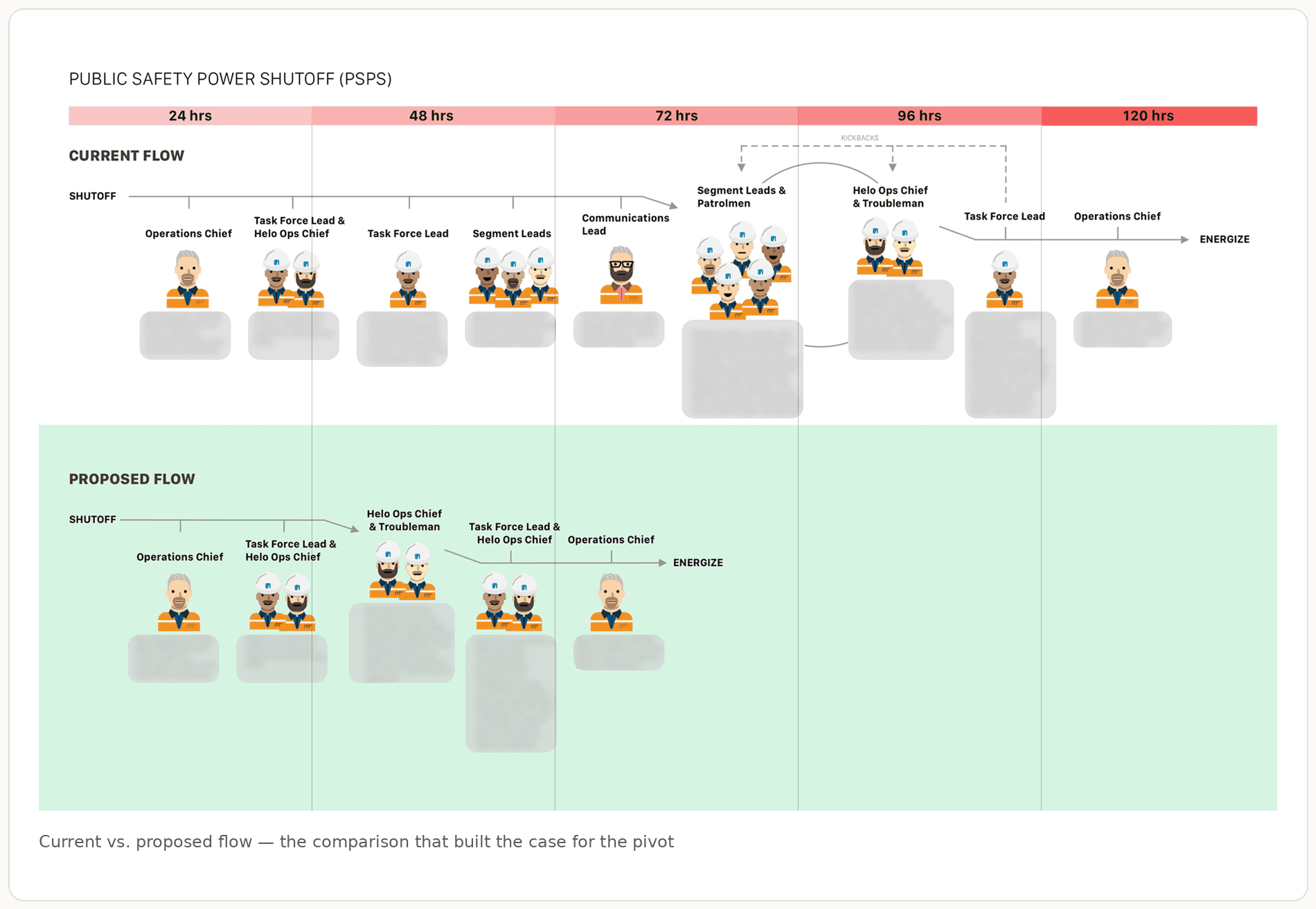
- Duplicated effort across 60% of the journey, caused by handoffs between ground and aerial teams
- No cellular reception in shutdown areas, ruling out any connected-only tool
- Ground inspectors often arrived after helicopter teams had already finished and reported back
- Inspectors had already built an effective offline workflow inside Maps+ — the opportunity was extending it, not replacing it
The Pivot
Based on this research, I made the case to pause the planned web app and refocus on helicopter-based aerial inspection inside Maps+. The redesigned flow removed handoffs and duplicated steps directly tied to the inefficiency we'd uncovered. Bringing engineering and business stakeholders into the research early meant the pivot had buy-in before a single screen was designed.


Key Design Decisions
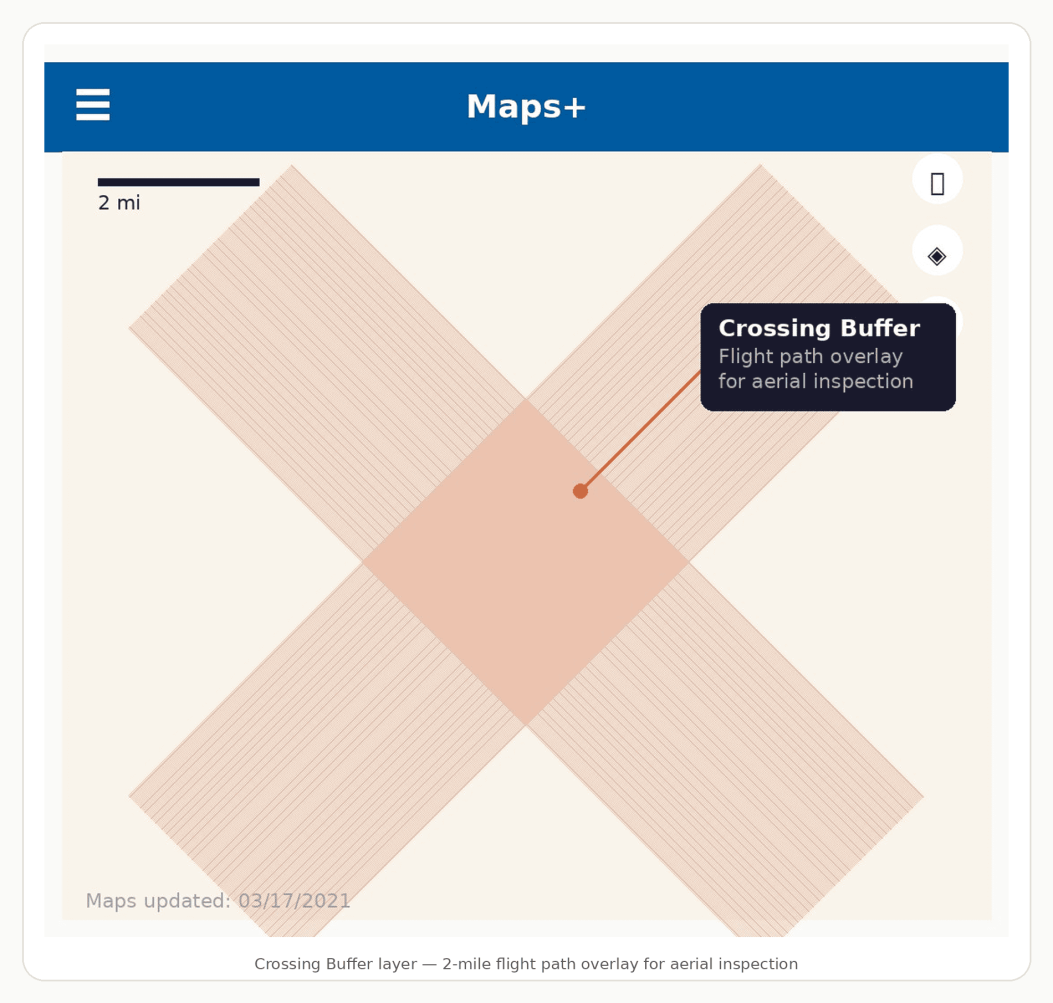
A 2-mile map view, not 800 feet. Ground inspectors worked at building-level zoom; aerial inspectors needed to see miles ahead at helicopter speed — a mismatch nobody had flagged until we tested with inspectors in the field.
A dedicated hazard layer, prioritized after two fatal accidents. Field testing surfaced a serious safety gap: power lines were nearly invisible against certain terrain in low contrast. I prioritized a high-visibility crossing-buffer layer, legible across lighting conditions and for colorblind users (roughly 1 in 12 men).
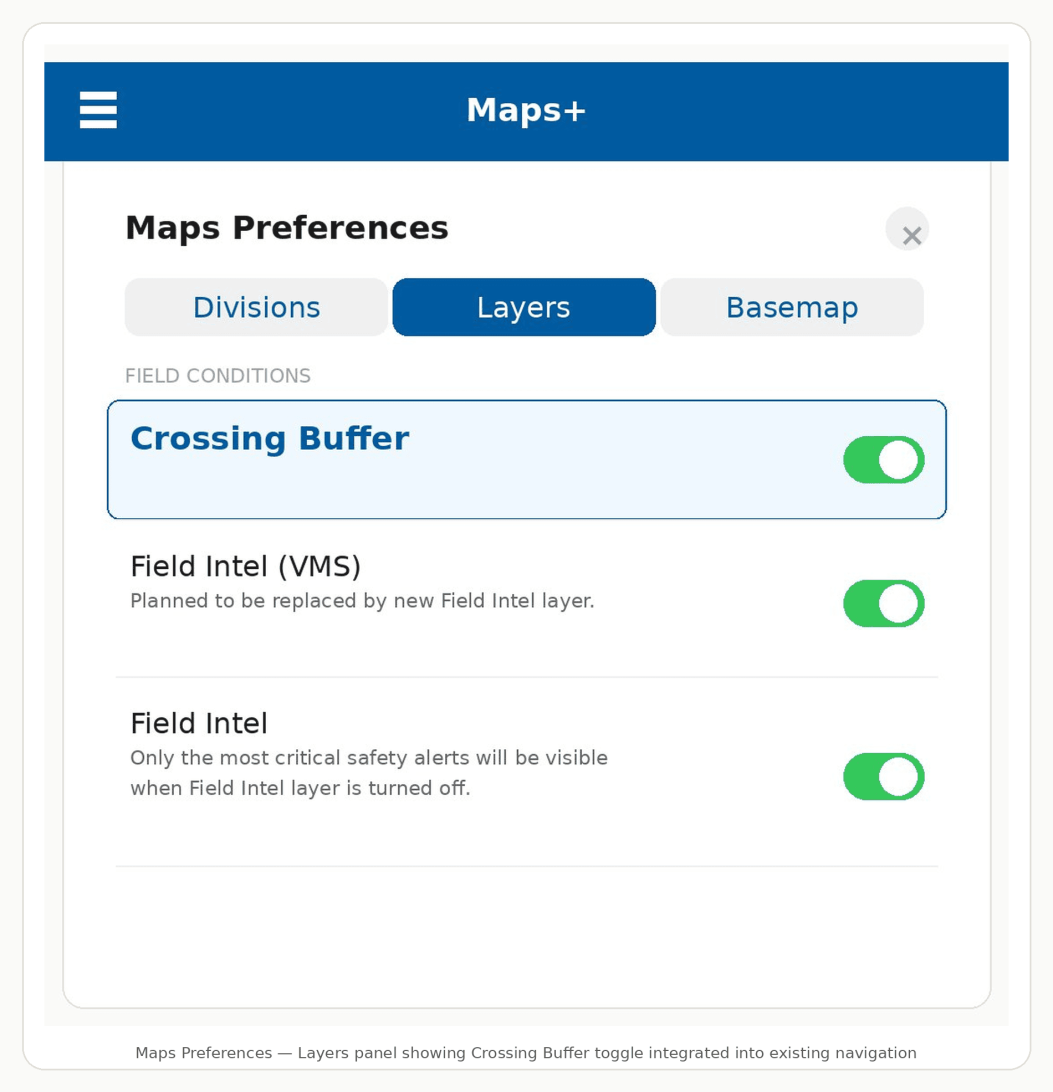
Built into the existing layers panel, not a new section. To protect the muscle memory inspectors relied on under pressure, new features lived inside familiar navigation rather than introducing new patterns.
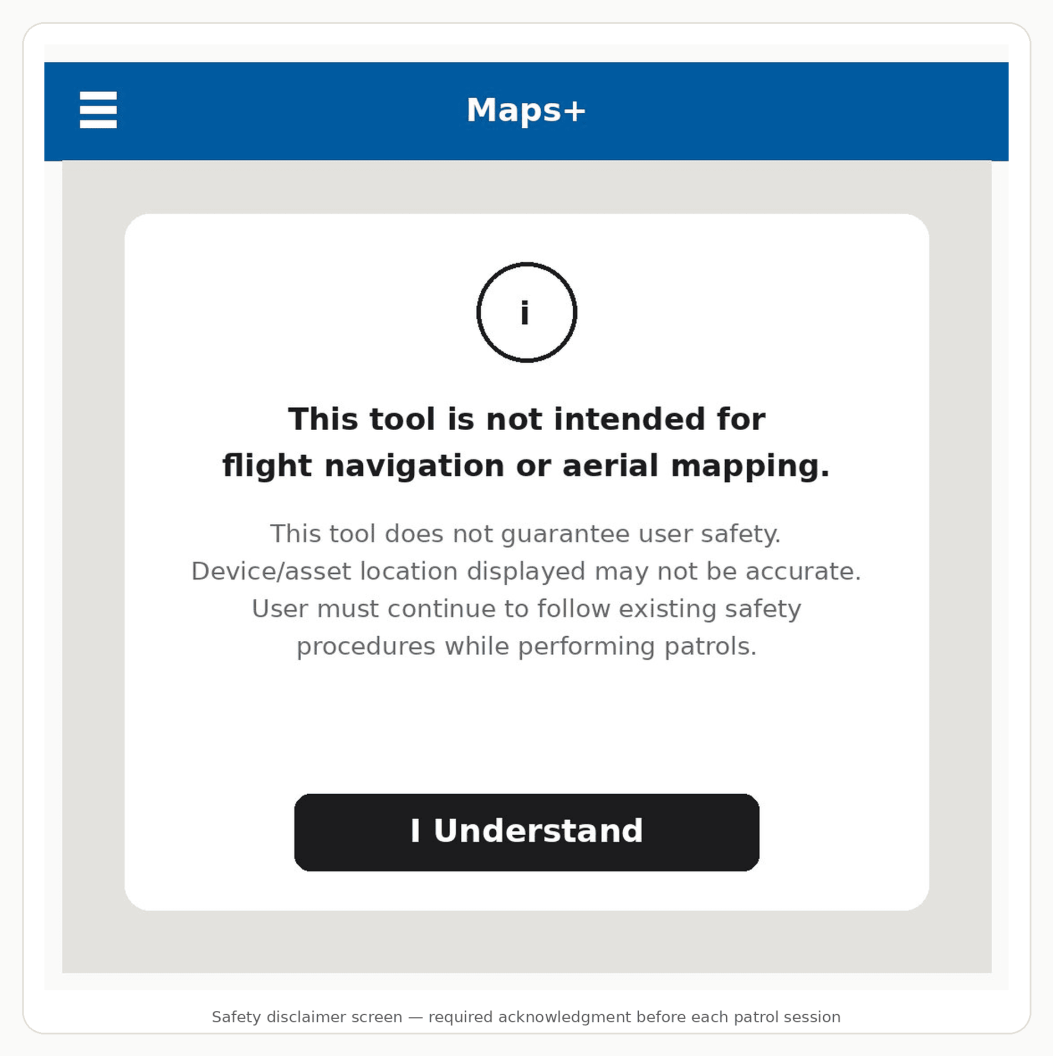
A safety disclaimer modal, added to meet legal requirements and ensure inspectors understood the tool's limitations before relying on it in the field.

Inspector pointing out the lack of visibility of some power lines due to low contrast

Visibility challenges with power lines
Impact
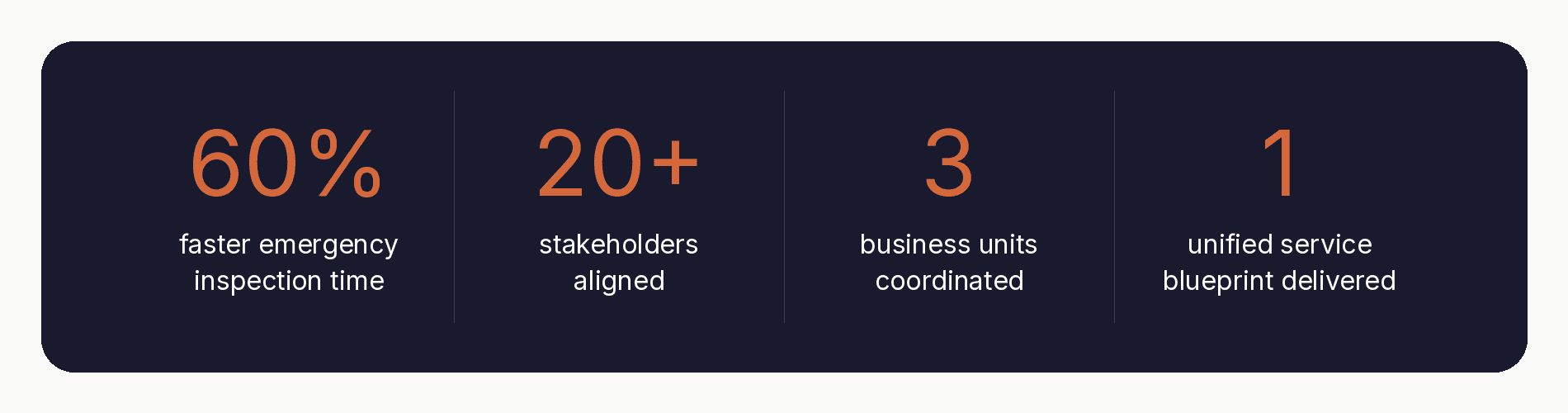
- 60% faster emergency inspections — restoring power in hours or days instead of weeks
- Millions saved by extending an existing tool instead of building new software
- 20+ stakeholders aligned across 3 business units through one collaborative workshop
- A safer field tool, directly shaped by real safety incidents and inspector feedback
Value to the business
By building on existing Maps infrastructure rather than shipping a new web app, we saved millions in development costs and reduced lawsuit exposure
Value to the user
We listened to inspectors on the front lines and enhanced our system to work with their established workflows. The new features make it easier and safer for them to search, plan, and identify power lines—even in extreme weather and high-pressure situations—reducing stress and preventing fatal accidents.
Value to the end customer
We streamlined the inspection process so PG&E can safely restore power 60% faster—often in hours or days instead of weeks. This means families, businesses, and vulnerable individuals get back to normal much sooner.